Introductory Paragraph:
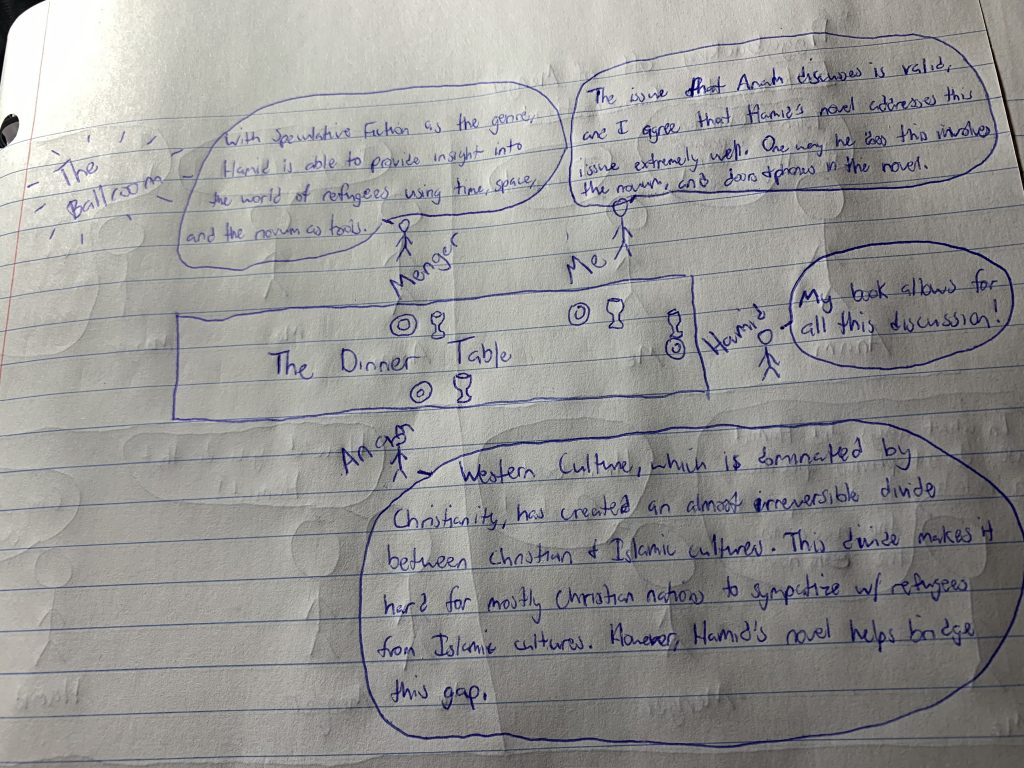
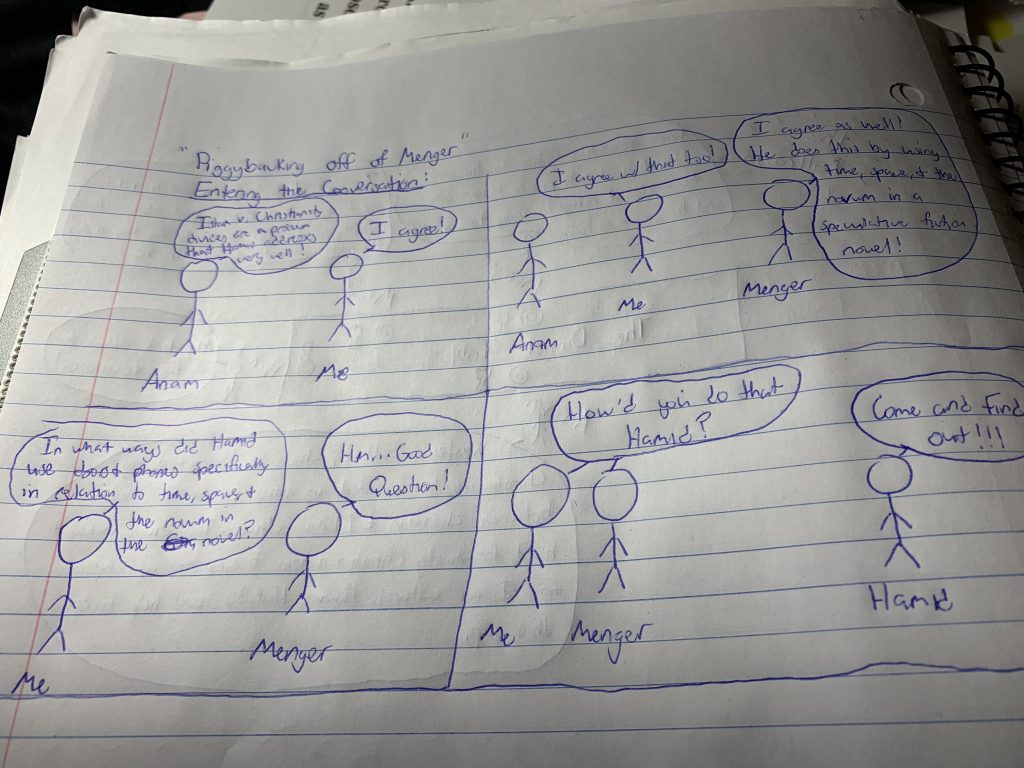
The issue regarding refugees and how to deal with excess numbers of them is very relevant, and very real. As the news, social media, and scholars alike display and debate these tragedies, neighboring nations continue to consider what their role should be in fostering, or reducing tension for these refugees. Meanwhile, we, as individuals, are stuck somewhere in the middle with all this information on our screens and at our fingertips… But what to make of it all? In his speculative fiction novel, Exit West, Moshin Hamid provides a very real insight into the lives of these refugees through the eyes of Saeed, and Nadia; two people from a war torn country in the Middle East. In her article, “What it feels like to be on the other: imaginations of displacement in contemporary speculative fiction,” Eva Menger argues that it is through the concepts of space, time, and the novum that Hamid is able to most effectively provide insight into the refugee experience. He also argues that speculative fiction is the best way for readers to “imagine the world of refugees in ways that in ways that other types of contemporary literature cannot.” As much as I agree with Menger’s two claims, I cannot help but wonder if there are more than just 3 tools/themes that Hamid used in his article to help provide this insight. When I read the book, two recurring themes that stuck out to me were the usage of phones and the magic doors that allow people to travel from place to place in a matter of seconds. In the case of Hamid’s Exit West, I will argue that the two themes: phones and doors are concepts that further enhance the effectiveness of time, space, and the novum that Eva Menger claims help provide insight into the refugee experience.
